Automatic Sliding Gates in the Hills District
A sliding gate runs across the opening on a track, so it does not care much about a rising driveway or a short setback. The trade-off is that it needs a clear, level run beside the opening at least as long as the gate.
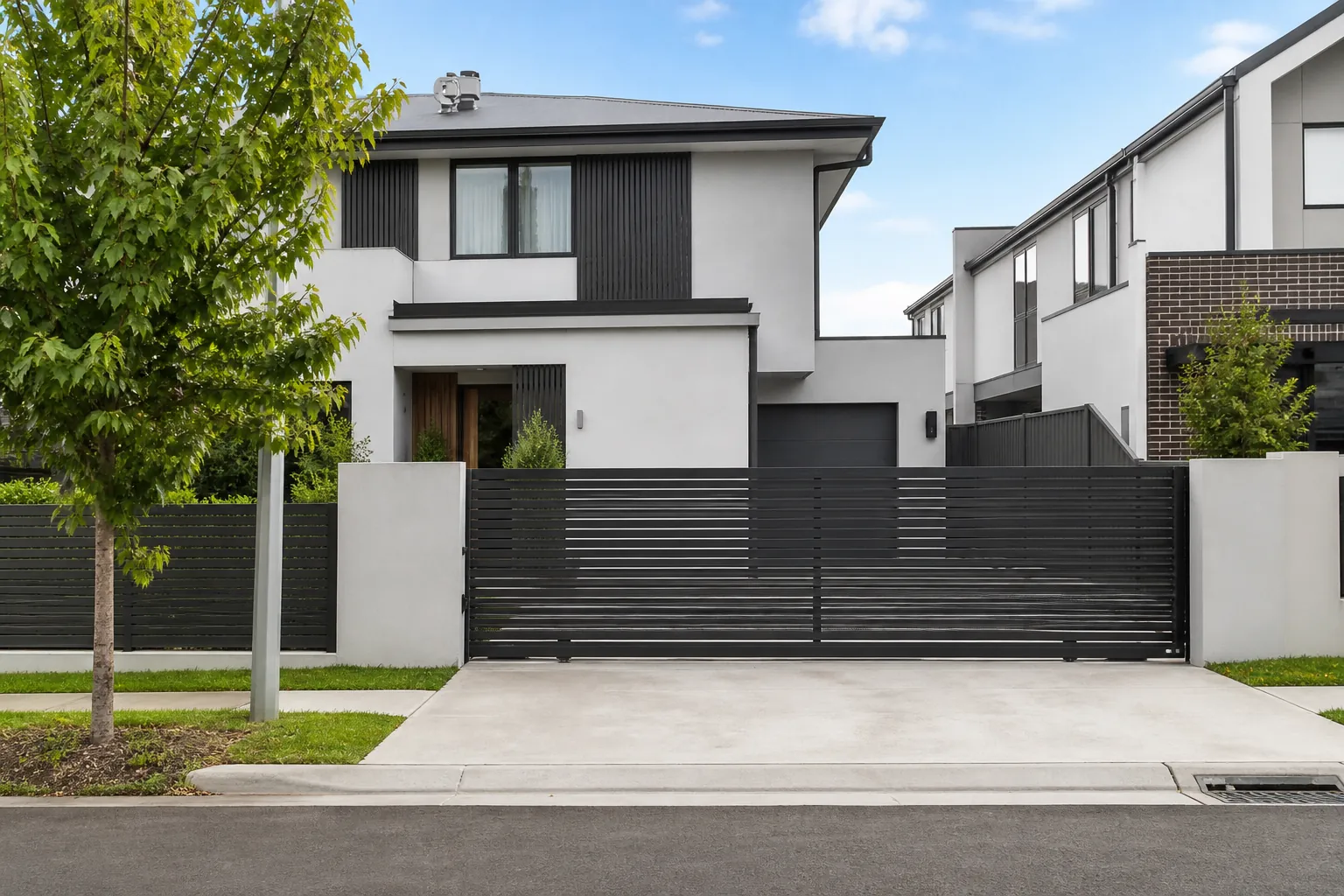
When sliding beats swing
Sliding gates are the usual answer when:
- the driveway rises or falls from the street, so a swing leaf would hit the ground
- the house sits close to the front boundary and there is no room for leaves to swing in
- cars park close behind the gate
- the opening is wide and a single panel looks cleaner than two leaves
On the newer estates in Box Hill, Kellyville and Rouse Hill, frontages are often narrower than in the established Hills suburbs, and garages are close to the street. That makes a sliding gate the practical option on many of these blocks. On older sloping streets in Castle Hill and Baulkham Hills, the slope is usually the deciding factor.
The side run matters most
A sliding gate needs somewhere to go. Behind the opening you need a straight run, roughly the width of the gate plus a little extra, along the fence line. That run needs to be:
- level along its length, or graded to a consistent fall
- clear of garden beds, retaining walls, letterboxes and water meters
- solid enough to carry a track and a concrete footing for the motor
If a retaining wall or a neighbour's fence gets in the way, there are options such as a telescopic gate (two panels that slide together) or a cantilever gate that rides on rollers mounted beside the opening rather than a ground track. A local installer will tell you which suits your block.
Track or cantilever
| Type | How it works | Suits |
|---|---|---|
| Track gate | Wheels run on a steel track set into the driveway | Most residential driveways |
| Cantilever gate | Panel hangs off roller carriages beside the opening; no track across the driveway | Uneven driveways, gravel entries, places where debris collects |
On gravel rural driveways and leafy streets where gumnuts and leaves pile up, a cantilever gate avoids the problem of debris jamming a ground track. It needs a longer panel and a longer side run, so it is not always possible.
Motors and safety
Sliding gate motors drive a toothed rack fixed along the gate. The motor size depends on the gate weight and how often it runs. Brands such as Centurion, BFT, ATA, Nice and Merlin are common in Australian installations. A heavy steel or timber-clad gate needs a heavier motor than a light aluminium slat gate.
The relevant Australian safety standard for electric gate drives is AS/NZS 60335.2.103. Ask your installer how the system detects obstructions, where the safety beams will go, and how the closing end and the gap at the back of the gate are protected so hands and paws cannot be caught.
Power, approvals and estate rules
Most sliding gate motors are mains powered with battery backup, though solar kits are available for lighter gates. Mains wiring to the motor is electrical installation work and must be done by a licensed electrician in NSW.
On newer estates, check your contract of sale or any registered restrictions for rules about front fences and gates before you commit to a design. The NSW exempt development rules also limit front fence height in residential zones, so confirm the design with council or a certifier if you are unsure.
Converting an old gate
An existing sliding gate that runs smoothly by hand can usually be motorised. If it is heavy to push, the track, wheels or guide rollers need attention first.
Request a quote and we will pass your details to a local installer in the Hills District.
Why choose us for automatic sliding gates
- Side run, levels and obstructions checked on site
- Track or cantilever chosen to suit your driveway surface
- Motor sized to the gate weight and daily use
- Pinch points and safety beams covered in the design
- Estate and front fence rules flagged before you order
Automatic Sliding Gates: common questions
How much space do I need beside the driveway for a sliding gate?
Roughly the width of the gate plus a little extra for the motor and end stops. Telescopic gates need less run, while cantilever gates need more. An installer will measure your fence line on site.
Is a cantilever gate better than a track gate?
It avoids a track across the driveway, which helps on gravel or where leaves and debris collect. It needs a longer panel and side run, so it does not fit every block.
Can a sliding gate run on solar?
Yes, for gates that are not too heavy and do not run many cycles a day. The panel and battery need to be sized to your usage and the shade at the gate. See our solar gate automation page for more.
Planning a new gate or automating an old one?
Tell us about your property and we will pass your details to an independent local installer who works across the Hills and Hawkesbury.